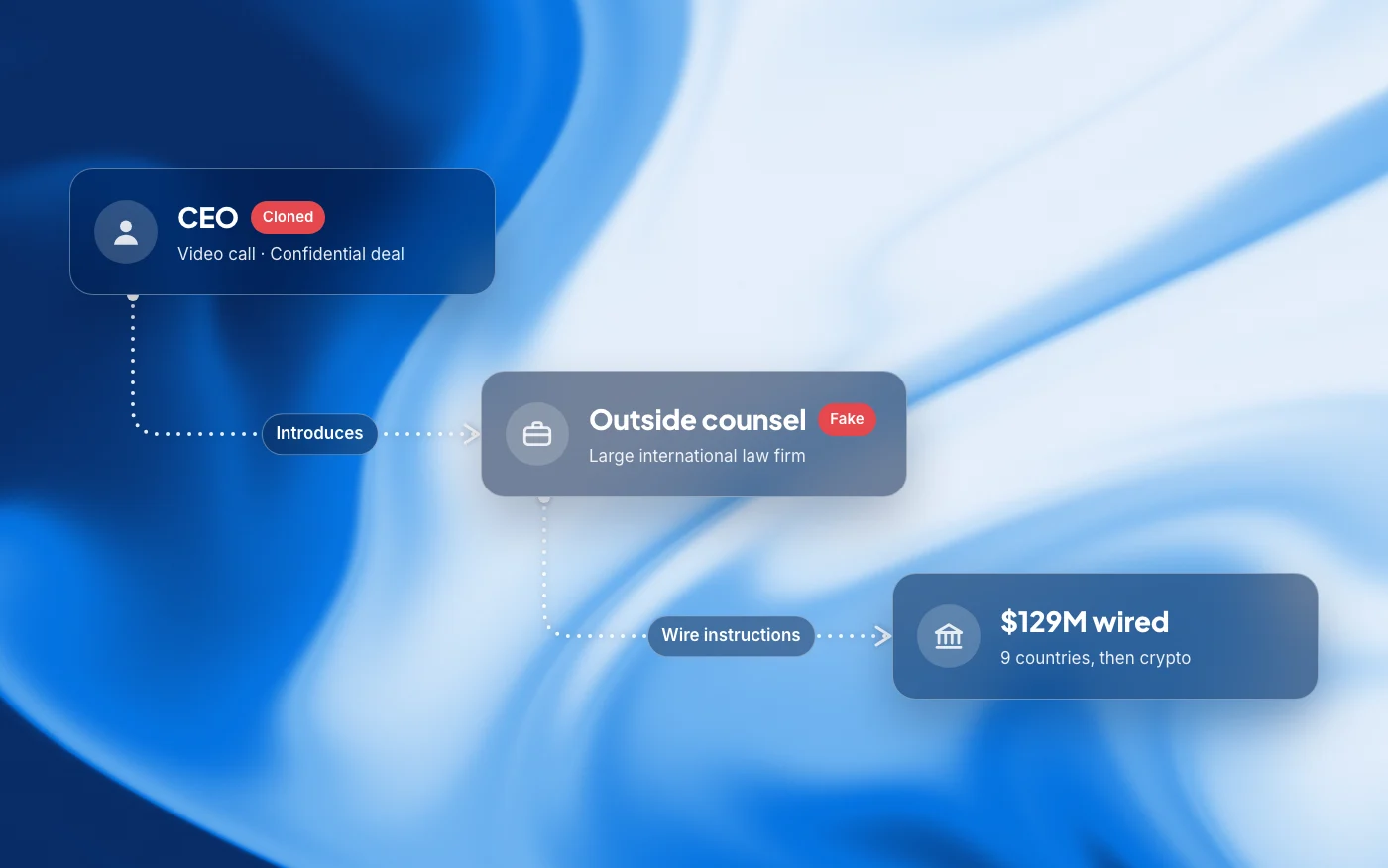
Binance's $6.3B hack ran through a fake job interview
A fake recruiter, a company that did not exist, and an assignment run on a work computer. Whether any face on those calls was synthetic is still unknown.

On 29 October, attackers used Binance's internal wallet signing service to move funds outside its normal withdrawal process. Binance says about $6.34 billion in digital assets were impacted and about $2.85 billion has been frozen or intercepted. The FBI attributes the theft to North Korea. Binance's initial report says the path ran partly through a fake job offer to one of its engineers.
How the attack was built
The offer was one step in a campaign of more than four months. Each fake identity supported the next: a profile, a company, a hiring process.
- —June: a wallet engineer downloads a tampered Homebrew installation. Binance replaces the device, but the wallet team is exposed to the attacker.
- —September: someone posing as a Project Director contacts a different engineer on a job platform.
- —A fake HR representative runs a live video interview and shares a social media account with personal photos and videos.
- —A "CEO" of a fictitious company runs a second round in a chat app, then tells the engineer to download an assignment. Its code runs on a work computer.
- —20 October: using that machine and an internal AI tool, the attackers gain control of two wallet engineers and find a deployment token.
- —29 October: they deploy a container and reach the signing service.
Was it a deepfake?
Nobody outside the investigation can say. Binance's report does not mention synthetic media, and no footage is public. A face swap would fit the record, and so would a real person with a fake name and stolen photos.
The question is a fair one. A September joint advisory from the FBI and its partners says North Korean actors have run online interviews with AI face swapping software, though it names a different group from the one the FBI blames here. It also says some of those actors operate as North Korean IT workers, the fake candidates companies screen for. Hiring is being attacked from both sides.
Where detection sits
A detector can score a face or a voice on a call it can see. The attackers arranged these calls, so a tool run by the employer was unlikely to be on them, and the decisive step was code, not a face. Detection is one layer. A fake identity needs a check at each layer.
- 01Confirm a company and recruiter exist using sources you find yourself, not links they send.
- 02Never run outside code on a work machine. Use a disposable environment.
- 03Keep long lived deployment tokens off engineers' computers, and have signing services validate every request.
- 04Make it safe to report a recruiter approach, even for someone quietly interviewing.